



History of the Special Olympics
I did not know much about the Special Olympics before my son enrolled. I knew the organization, championed by Eunice Kennedy Shriver, offered sports for adults with intellectual and developmental disabilities. I learned from the Special Olympics website that the games can be traced back to a 1962 summer camp hosted by Eunice in her Washington, D.C. suburban home. The summer camp was part of a broader familial initiative through the Joseph P. Kennedy Jr. Foundation to support people with intellectual disabilities. As it turns out, the Kennedy family interest in disability, like my own, was deeply personal.
Introduction to Rosemary
Eunice’s older sister, Rosemary Kennedy, was born with a cognitive disability, the exact nature of which is somewhat shrouded in mystery. In 1962, Eunice broke a significant family and societal silence when she published an article in The Saturday Evening Post discussing her sister’s disability. Eunice described Rosmary as a beautiful child who was slower to develop than her siblings but competitive in spirit. She loved music and learned to dance as a teenager but was reportedly unable to keep up in social situations. As a young adult, she became increasingly irritable and difficult. As a potential cure, Rosemary’s father arranged for her to receive an experimental lobotomy when she was 23 years old. The procedure involved inserting an ice pick through her eye socket to sever nerve pathways from the frontal lobe to the rest of the brain. It was a devastating failure that left Rosemary unable to walk or talk. During the same year, Rosemary’s family moved her into an institution.
A Twist of Fate
The irony of Rosemary’s fate was not lost on me. As I watched the parade of Special Olympic athletes march across the stadium for the Opening Ceremony, I realized that Rosemary’s lost ability to walk may have helped give today’s adults with disabilities the opportunity to run, both literally and figuratively. While medicalized therapies are generally available to improve specific skills like movement and communication, everyday activities like sports are what solidify such skills into a meaningful life. For my son, having a safe place with peers to practice managing his anxiety was a game changer, and the modified playing field allowed him to experience success as well as challenge. As they say in the Special Olympics: “Let me win. But if I cannot win, let me be brave in the attempt.”
The Special Olympics also provided my son and our family the chance to be part of something bigger than ourselves, a community where disabled people are accepted as they are. Behavior that might be viewed as unusual in other settings—fidgeting, pacing, rocking, or making unexpected noises for example—were commonplace. Those of us without cognitive disabilities were the neurominority. The setting alone invites people to question, what is “normal,” and who gets to decide that? The community also provided athletes and families reprieve from the everyday worries of being misunderstood, judged, or excluded.
Nothing about us without us
Even in the midst of such benefits, I remained uncomfortably aware that the Special Olympics was developed and led primarily by nondisabled people from its earliest inception. This doesn’t mean that disabled people were never involved in decision-making or that their perspectives weren’t taken into consideration, but it did lead me to wonder whose voices and perspectives were missing. I couldn’t shake the persistent question in the back of my mind: What would Rosemary Kennedy think of it all?
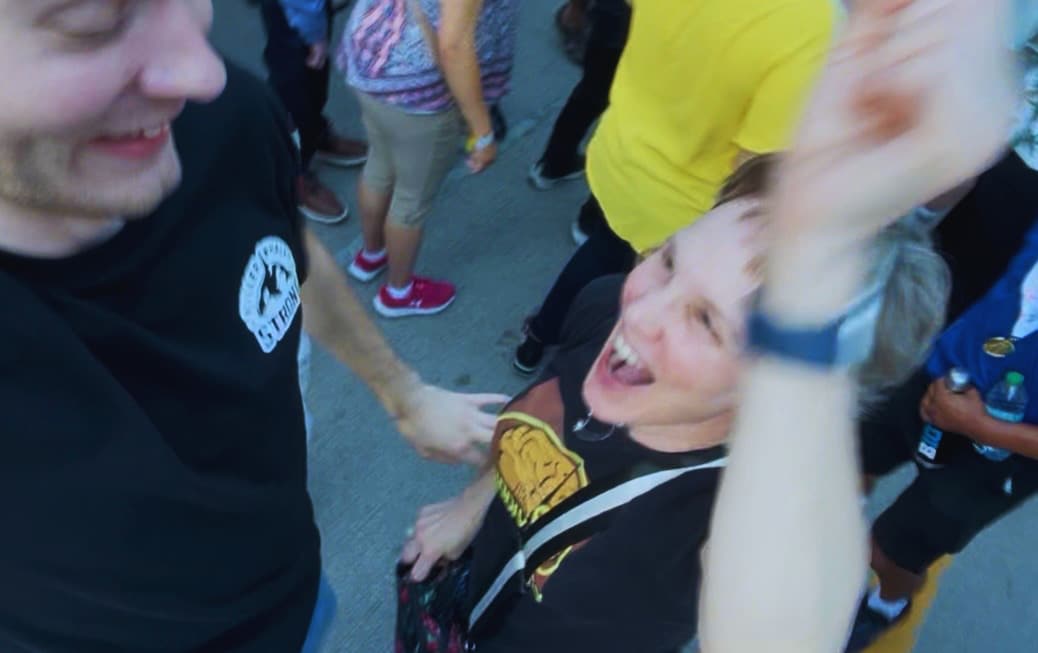
When I asked my son what he thought of the Summer Games, he acknowledged that it helped him face his fears, but overall, he would have rather watched a favorite movie. In fairness to the Special Olympics, the movie comparison is a high bar. We both agreed that the Saturday night Victory Dance was the highlight of the games. Young adults and various family members spilled into a closed off downtown street, dancing together in a sea of shared emotions, seemingly unfettered by disability status. The first few beats of ‘Golden’ by Huntrix brought an electric wave of fists pumping into the air coordinated with the lyrics:
“I’m done hiding; now I’m shining; like I’m born to be.
We dreaming hard; we came so far; now I believe.”
This one is for you, Rosemary.